



When it comes to curly hair, we often focus on shape, volume, and definition. But there is a crucial factor that is often overlooked: hair porosity. Understanding your curl’s porosity helps you choose the right products, optimize your Curly Routine, and achieve healthy, elastic, and luminous hair.
Let’s explore what hair porosity is, how it affects curls, and how to determine it
Curly hair porosity: what it is and what it depends on
Hair porosity refers to your hair’s ability to absorb and retain moisture. It depends on the condition of the cuticle, the outermost layer of the hair shaft, which is made of overlapping scales that can be more or less open.
When the cuticles are tightly closed, hair absorbs water slowly but retains it well. When they are open, hair absorbs moisture quickly but also loses it just as easily.
Porosity is influenced by several factors, including:
- Genetics: some people are naturally born with more porous hair.
- Chemical treatments and heat: bleaching, coloring, flat irons, and blow dryers can damage the cuticle and increase porosity.
- Hair routine and products: an unbalanced Curly Routine can alter hair’s natural equilibrium, making it either too dry or overloaded with product.
- Environment: humidity, sun, wind, and pollution affect the cuticle and therefore hair porosity.
Types of hair porosity: low, medium, and high
There are three porosity levels: low, medium, and high. Each one affects how hair absorbs and retains moisture, and how it reacts to products and the environment.
Low Porosity Curly Hair
If your hair feels almost waterproof and products struggle to sink in, you have low porosity hair. Water tends to sit on the surface instead of being absorbed, making hydration more challenging. Drying time is usually long, which can be frustrating when you’re trying to achieve soft, well-defined curls.
The upside? Low porosity curls are naturally shiny and less prone to frizz, keeping their shape longer. However, to maintain proper hydration and health, a targeted routine is essential.
Medium Porosity Curly Hair
You’ve hit the sweet spot. Medium porosity hair absorbs moisture efficiently and holds onto it well, maintaining a balanced level of hydration without becoming dry or weighed down.
This makes it the easiest porosity type to manage. Curls are elastic, defined, and respond well to both moisturizing and protein-based treatments, allowing for a flexible and effective Curly Routine.
High Porosity Curly Hair
If your hair absorbs water and products instantly but dries just as quickly, you likely have high porosity hair. This happens because the cuticle is very open—often due to chemical treatments, frequent heat exposure, or repeated coloring.
The result is hair that feels dry, frizzy, and prone to breakage, requiring constant hydration and nourishment to stay soft and defined.
One of the biggest challenges with high porosity hair is moisture retention. Even though it absorbs water quickly, it also loses it just as fast, leaving hair feeling dry and fragile, especially at the ends.
Which Products to Choose Based on Hair Porosity
Understanding your hair’s porosity allows you to choose the right products to nourish and protect it. Here are some helpful guidelines for each porosity type.
For Low Porosity Curly Hair
If your hair struggles to absorb products, it’s best to choose lightweight, water-based and moisturizing formulas to avoid product build-up on the surface.
A useful trick is to apply a bit of heat to help absorption: try wrapping a warm microfiber towel around your head or wearing a heat cap while your favorite mask is processing.
Very thick oils and butters can be too heavy, creating a barrier that prevents moisture from penetrating the hair shaft. Instead, opt for fluid leave-ins and easily absorbed masks to keep your curls elastic and hydrated without weighing them down.
For Medium Porosity Curly Hair
If you’re lucky enough to have medium porosity hair, your routine can be quite flexible. Alternating moisturizing and protein treatments will help maintain the right balance.
Using a nourishing mask once a week is a great habit to add strength and definition to your curls. Choose lightweight leave-in conditioners when you want a fresher, airier feel, or richer creams during periods when your hair needs more nourishment.
If you notice changes in your hair’s texture, adjust your routine to match its new needs and preserve its health and elasticity.
For High Porosity Curly Hair
Here, the main challenge is keeping moisture locked in for as long as possible. Using nourishing butters and oils helps seal hydration inside the hair and prevent excessive dryness. Shea butter, coconut oil, and argan oil can be powerful allies.
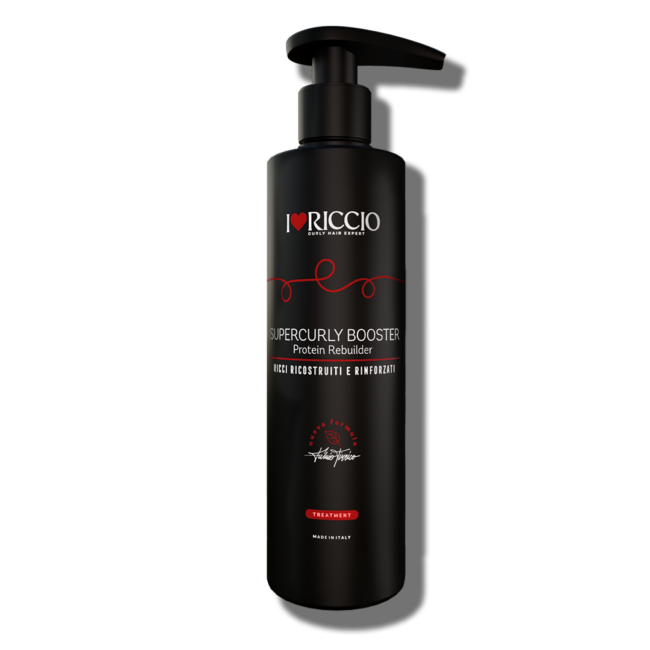
In addition to moisture, high-porosity hair also needs protein to strengthen its structure. Incorporate regular protein treatments into your routine, such as our SuperCurly Booster, to revive and reinforce your curls.
Avoid washing too frequently and always use a leave-in conditioner to keep moisture locked in and protect the hair from external stressors that can worsen porosity.


How to determine your curly hair porosity
Now that you know the porosity types, it’s time to discover yours! There are several ways to test your hair’s porosity.
The Water Glass Test
This is the most well-known and immediate method. Take a clean, dry strand of hair and drop it into a glass of room-temperature water. Observe it for a few minutes.
- If it floats for a long time, you have low porosity: the cuticle is tightly closed and struggles to absorb water.
- If it stays suspended in the middle, you have medium porosity: your hair retains moisture in a balanced way.
- If it sinks quickly, you have high porosity: the cuticle is open, so it absorbs water fast—but also loses it quickly.
The Absorption Test
Apply a small amount of leave-in or moisturizing cream to a clean, dry strand of hair and observe how it reacts.
- If the product sits on the surface and struggles to absorb, you have low porosity, so you should use lightweight, water-based products.
- If it absorbs gradually and evenly, you have medium porosity, so a balanced mix of moisture and protein works best.
- If it absorbs immediately but feels dry again after a few minutes, you have high porosity and need richer products and sealing techniques to retain moisture longer.
The Texture Test
Gently slide a strand of hair between your fingers and focus on how it feels.
- If it feels smooth and compact, you have low porosity: the cuticles are tightly sealed and resist moisture absorption.
- If it feels slightly textured, you have medium porosity: the cuticles are slightly raised, allowing balanced absorption.
- If it feels rough, uneven, or fragile, you have high porosity: the cuticles are very open and the hair is more prone to dryness and damage.
Knowing your hair’s porosity is the key to caring for your curls the right way. Every curl is unique and needs specific attention to express its natural beauty at its best.
Adjust your Curly Routine to match your porosity and you’ll see the difference: curls that are more hydrated, more defined, and in perfect harmony