Now that you understand what causes frizz, it is time to move on to the practical part. These are the most effective remedies for frizzy hair, both for immediate action and long-term management.
1. Choose the Right Shampoo — and Forget Sulphates
The first anti-frizz strategy starts in the shower. Many traditional shampoos contain sulphates, aggressive surfactants that cleanse the hair but also strip it of its protective natural oils. The result? Hair that, after washing, is even drier, puffier and more prone to frizz.
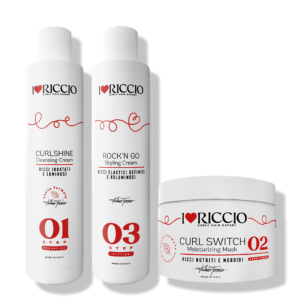
For frizzy curly hair, the ideal choice is a gentle shampoo for frizzy hair, free from sulphates, silicones and parabens, which cleanses without over-stripping. Among products specifically formulated for curly hair, such as CurlShine® by I Love Riccio, you can find shampoos based on plant oils that replenish the lipid component of the hair, improve elasticity and restore shine from the very first wash.
A practical tip: when washing your hair, do not use water that is too hot. Hot water tends to lift the cuticles and further dehydrate the hair. It is better to wash with lukewarm water and finish with a cool rinse, which helps close the cuticle scales.
2. Never Skip the Hydrating Mask
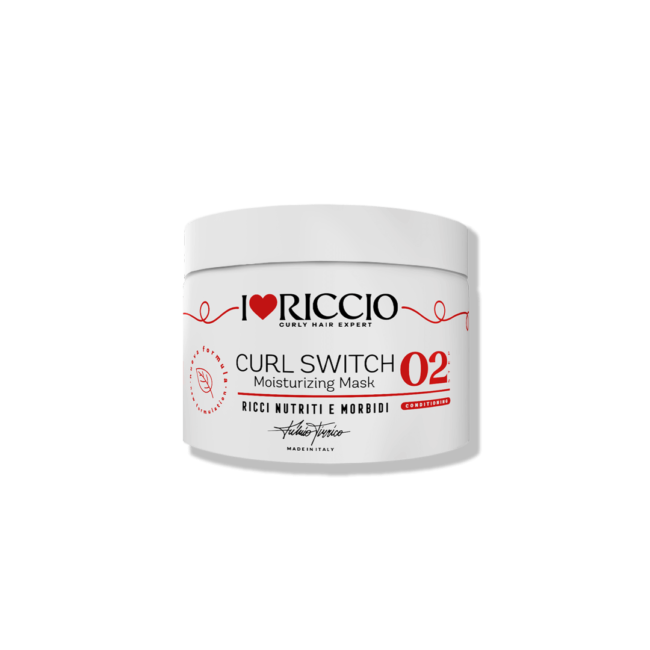
If there is one step in the Curly Routine you cannot afford to skip when you have frizzy hair, it is applying a mask for frizzy hair after washing. Conditioner’s role is to restore the hydration and nourishment lost during cleansing to the hair fibre, helping close the cuticles and making the hair softer, more elastic and more defined.
Look for nourishing masks based on argan, macadamia and jojoba oils, which act deeply, giving elasticity and shine. To guide your choice, read the in-depth article on how to find the best mask for your curls. If you have very dry and frizzy curls, an effective trick is to rinse the mask only partially, for just 5 seconds, so as to leave a light protective film on the hair that will help counteract frizz throughout the day.
3. Use Co-Wash for Extra Hydration
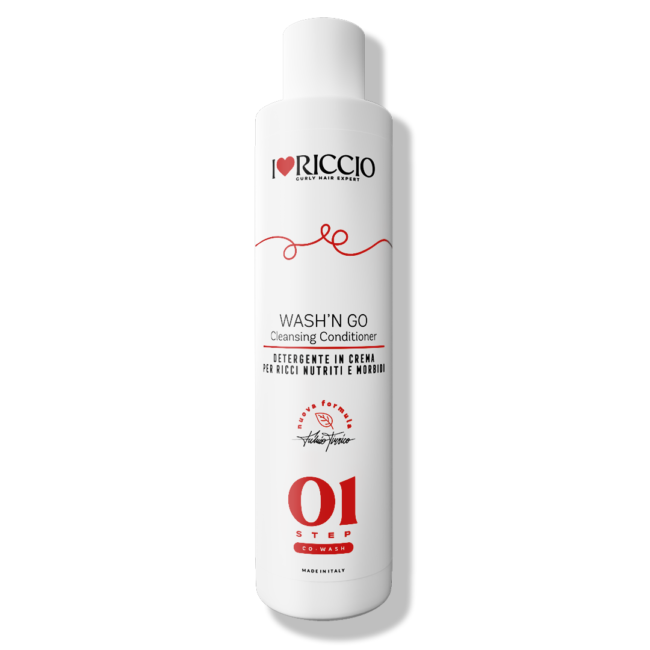
Perhaps you have already heard of it, or perhaps it is new to you: co-wash is a conditioning washing method that combines cleansing and hydration in a single step, without foam. For very dry and frizzy curly hair, it is one of the most effective solutions of all.
Co-wash is particularly suitable for those with coarse-textured and very dehydrated hair. Used periodically, it significantly reduces frizz, which can sometimes be accentuated precisely by normal shampoos. Look for non-foaming cleansing creams based on hydrolysed wheat proteins and trace elements that deeply hydrate without weighing the hair down.
4. Dry Your Hair the Right Way
The way you dry your hair can make the difference between defined hair and unmanageable frizz. Here are the fundamental rules:
Never rub your hair with a cotton towel. Friction opens the cuticles and creates frizz and static electricity. Instead, use a microfibre towel and limit yourself to gently blotting the strands, or wrap your hair using the plopping technique to absorb excess water without creating friction.
If you use a hairdryer, set it to a medium-low temperature and keep it at a distance of at least 10-15 centimetres. Excessive heat is one of the worst enemies of hair hydration.
Always use a diffuser to distribute heat evenly and protect the curl shape. Dry starting from the lower part of the strands and move towards the roots.
At the end of drying, treat yourself to a final blast of cold air: it will help seal the cuticles and set the definition.
If conditions allow, air drying remains a valid alternative, provided the surrounding environment is warm and dry. In humid environments, air drying could paradoxically worsen frizz. For all the details on techniques and tools, read the guide on how to wash and dry curly hair.
5. Apply Styling Products to Wet Hair
This is a step that many people underestimate, but in the Curly Routine it represents a real turning point in fighting frizz. Styling products should be applied to very wet hair, not towel-dried hair. The hair should literally be dripping wet: only in this way can the product distribute evenly along the full length of the strands, sealing hydration inside the hair fibre.
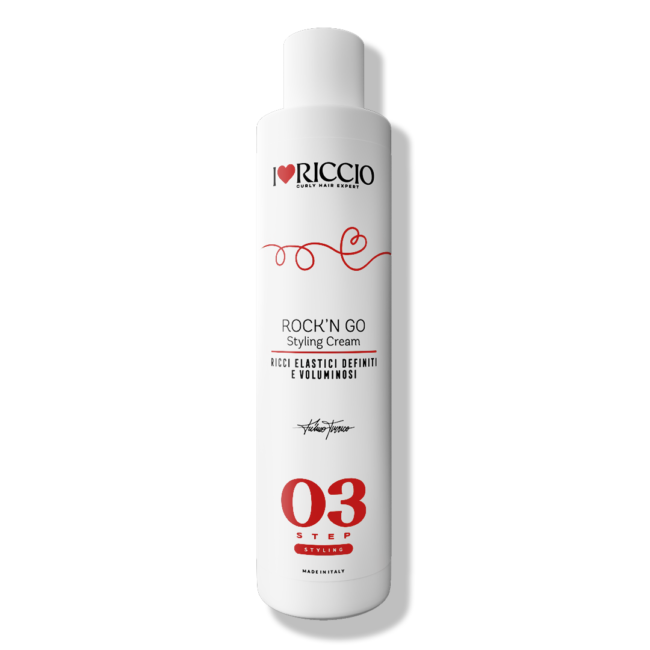
Among the most effective application techniques, scrunching — squeezing the strands from the bottom towards the roots — and the praying hands method — distributing the product with open hands that “slide” along the strands — are the most widely used by the curly community. Styling creams based on hydrolysed keratin and collagen, such as Rock’n Go® by I Love Riccio, give definition and volume while reducing frizz.
6. Protect Your Hair at Night
Haircare does not stop when you go to sleep. In fact, night-time is one of the moments when frizz forms most easily, due to the continuous friction between the hair and the pillow. Traditional cotton pillowcases absorb the hair’s natural moisture and create rubbing, opening the cuticles and causing the frizz you find when you wake up.
The solution is simple: sleep on a pure silk pillowcase or wear a satin cap before going to bed. Satin and silk have a smooth surface that drastically reduces friction, keeping the hair soft, shiny and disciplined until morning.
Among the useful accessories for curly haircare, you will find satin caps and silk pillowcases designed for this purpose.
Another very useful technique is the so-called “pineapple”: gather your hair high on your head with a soft silk scrunchie — never tight elastics that break the hair — before sleeping. This way you will avoid flattening your curls, and the next morning you will only need to release the ponytail to restore volume and definition.
7. Avoid Excessive Heat — and Forget the Straightener
The straightener is one of the most damaging tools for curly hair. The water vapour generated when the hot iron comes into contact with the strands disperses all the hair’s natural moisture, leaving it dry, fragile and inevitably frizzier than before.
If you really cannot give up a heat tool, always use a heat protectant before application and keep the temperature as low as possible. But the best advice is another: learn to love your natural curl and enhance it with the right techniques and products. The result will be much healthier, more defined and frizz-free hair than any style achieved with heat. If your hair is already damaged by heat, discover how to care for damaged curly hair.
8. Natural Remedies for Frizzy Hair: Oils and DIY Packs
If you are looking for natural remedies for frizzy hair, nature offers extraordinary ingredients to nourish and discipline the hair. Here are the most effective:
Coconut oil: thanks to its particular molecular composition, it can penetrate inside the hair shaft, unlike many other oils that remain on the surface. It nourishes deeply and gives that slight weight that helps counteract puffiness. Apply it to the lengths, leave it on for at least one hour, or overnight by wrapping your hair in a turban, then proceed with your normal wash.
Argan oil: rich in vitamin E and fatty acids, it is perfect for softening hair without weighing it down. Ideal for finer textures.
Sweet almond oil: absorbs quickly, is not greasy and does not weigh the hair down, leaving it soft and shiny. A few drops on damp ends work wonders.
Apple cider vinegar: one tablespoon diluted in a cup of lukewarm water as a final rinse helps close the cuticles and rebalance the hair’s pH, counteracting frizz. You will see results after the first few weeks.
Aloe vera: its gel can be used as a real natural styling product. It helps maintain curl shape and reduce frizz, adding hydration without heavy residue.
Honey and olive oil: mix two tablespoons of honey with three teaspoons of extra virgin olive oil for a super-nourishing pack. Massage into lengths and ends, leave on for 10-15 minutes and rinse.
Phytokeratin: available commercially in powder form, it can be added to your usual mask to enhance its restructuring effect.
If you prefer products already formulated with these natural ingredients, you can find a selection of concentrated treatments among oils and butters for curly, dry and frizzy hair.
9. Refresh Without Washing
Perhaps you too have noticed that on the second or third day after washing, your curls begin to lose definition and frizz appears. Refresh is the solution: it consists of reviving curls between one Wash Day and the next, without having to repeat the entire washing process.
The technique is simple: mist water onto the hair with a fine mist spray bottle, then apply a small amount of leave-in or lightweight cream to the strands that have lost their shape. Among specific products for curl refresh, sprays such as Magic Curl Reactivator® by I Love Riccio are formulated to rehydrate and redefine the strands without weighing them down.
10. Act at the Roots — Literally
If your problem is frizz concentrated mainly at the roots, with the top of your head looking messy and untidy while the lengths remain more defined, you need a targeted approach. This type of frizz is very common in fine curly and wavy hair, where the weight of the strands is not enough to keep the roots “down”.
Here is what you can do: during diffuser drying, use small root clips to apply to the roots of damp hair. They lift the hair at the base, creating volume without frizz because they keep the strands in place while they dry. Once the clips are removed from dry hair, the result is harmonious volume and definition from roots to ends. To explore this technique further, read the guide on clipping for curly hair and root volume.
Be careful, however: avoid applying styling products that are too heavy directly to the scalp. Oil-based products on the roots tend to weigh the hair down and make it dirty faster, forcing you to wash it more often, which in turn worsens frizz. Focus the application of nourishing products on lengths and ends.
11. Care for Your Hair from Within
Do not forget that your hair’s health also begins with what you put on your plate and how you treat your body. Body hydration is the first ally against dry and frizzy hair: drinking at least one and a half litres of water a day makes a real difference to the quality of your hair.
From a nutritional point of view, make sure your diet includes foods rich in omega-3 and omega-6 fatty acids — fish, nuts, flaxseeds — biotin — eggs, legumes — zinc — meat, whole grains — and vitamin C — citrus fruits, kiwi. These elements contribute to overall wellbeing, which is also reflected in the appearance and quality of your hair.
Stress is another factor that directly affects hair health: high cortisol levels can alter the hair growth cycle and worsen dryness. It is no coincidence that many people notice frizz worsening during particularly demanding periods.
12. Do Not Wash Your Hair Too Often
The feeling of freshness and cleanliness after shampooing is priceless, but washing your hair too frequently is one of the most underestimated causes of frizz. Every wash, even with the gentlest shampoo, removes part of the natural oils that protect and lubricate the hair. If you wash your hair every day, the hair never has time to rebuild this protective barrier.
For curly hair, the ideal washing frequency is 2-3 times a week. Between one wash and the next, you can use refresh, as we saw in point 9, to keep curls defined and frizz-free. If you feel the need to “refresh” the scalp without a full wash, co-wash is a perfect alternative: it cleanses gently without depriving the hair of the hydration it needs.