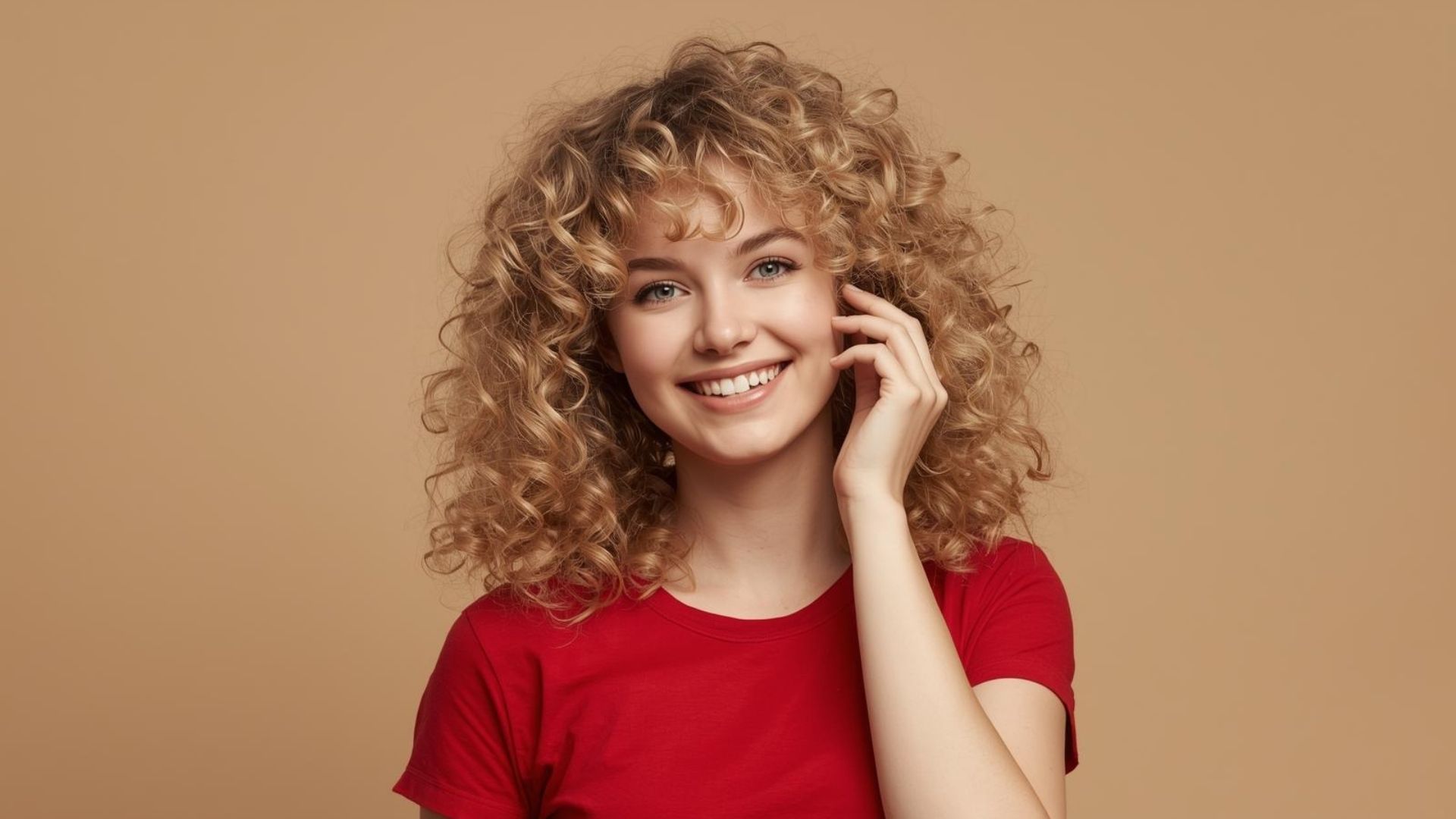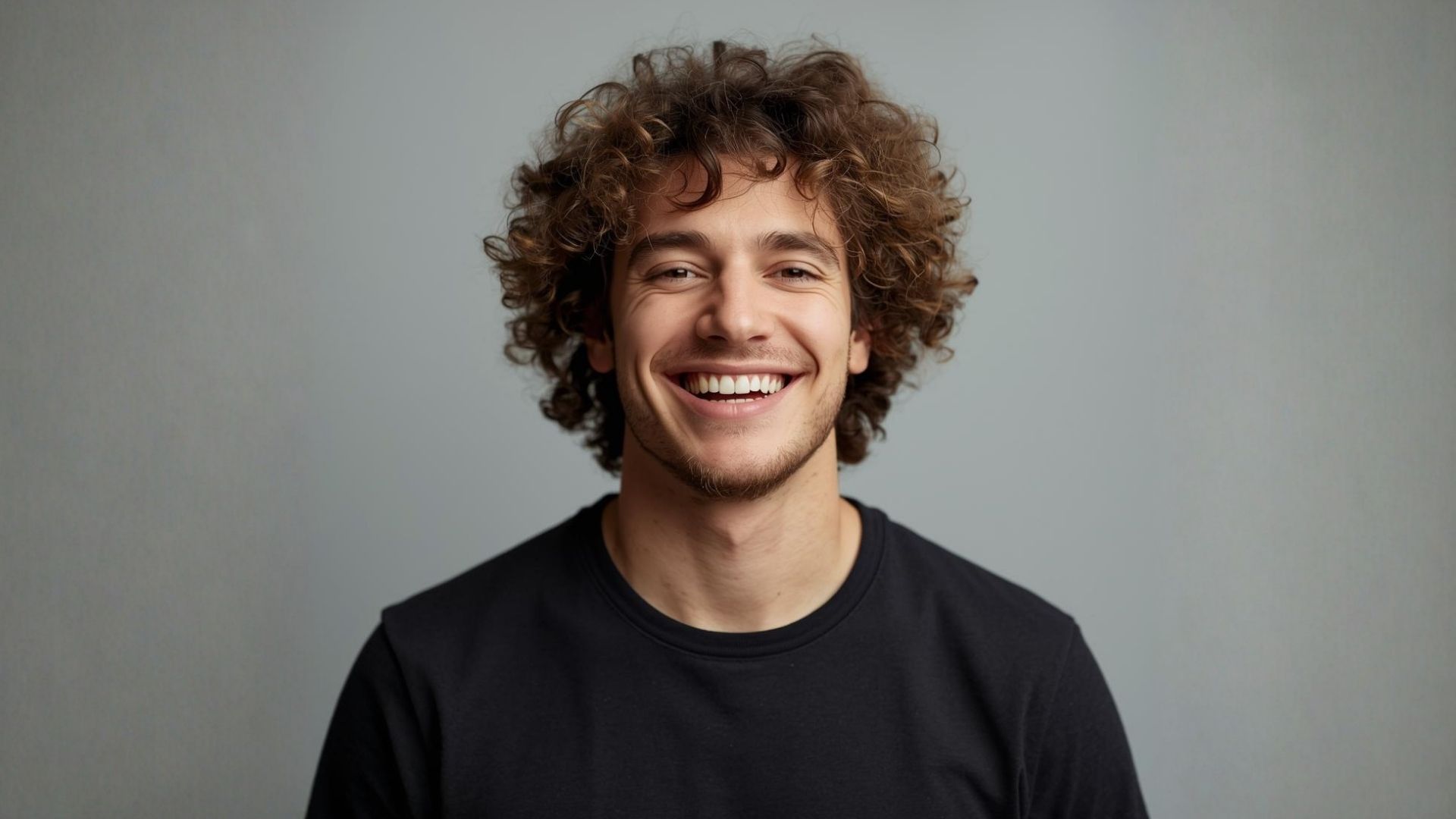




Choosing the right color for curly hair is about much more than aesthetics. It’s about enhancing your natural texture, respecting the hair fiber, and finding the shade that brings light and personality to your curls.
Color treatments can completely change the way you see yourself in the mirror: soft highlights, warm or intense reflections, deep or vibrant nuances — every choice helps tell your story.
In this article, we explore the most suitable shades, the pros and cons of solid color versus blended color, and the best techniques for achieving colored curly hair without compromising health or definition.
Which colors look best on curly hair?
Curly hair reflects light in a unique way: its three-dimensional shape creates natural shadows that make color nuances even more interesting. That’s why, when it comes to color for curly hair, it’s important to choose tones that blend harmoniously with the movement of the hair.
Among the most loved shades are copper curly hair tones, perfect for those with warm bases who want to energize their look without drastic changes. If you prefer a deeper, more enveloping effect, mahogany curly hair is an elegant, refined choice that beautifully enhances medium to dark skin tones.
For those who love a natural yet luminous result, caramel or chocolate brown tones create a stunning contrast between light and volume. And blondes? They work beautifully on curls too — especially in honey, sand, or golden shades, applied with blended techniques that respect curl structure.
The goal isn’t just to change color, but to achieve colored curls that look alive: multidimensional, radiant, full of light. That’s why it’s essential to consider hair porosity, choose shades based on your skin’s undertone, and rely on professionals experienced in coloring curly hair.


Colored curly hair: highlights or solid color?
Is a full color or a blended effect better? The answer depends on several factors: your personal style, the result you want to achieve, and the overall health of your curls.
Solid hair dyes for curly hair can be a good choice if you want full gray coverage or a bold, noticeable change. However, on very voluminous curly textures, a flat, uniform color can sometimes weigh down the look and make it appear less dynamic.
Blended shades, on the other hand, are perfect if you love a natural, lively effect. Techniques such as pintura highlights with a painting effect work with the curl’s natural three-dimensional shape, creating a play of light and shadow that enhances the beauty of the curl pattern. This type of coloring for curly hair also has the advantage of being lower maintenance: regrowth is less noticeable, and the color evolves more harmoniously over time.
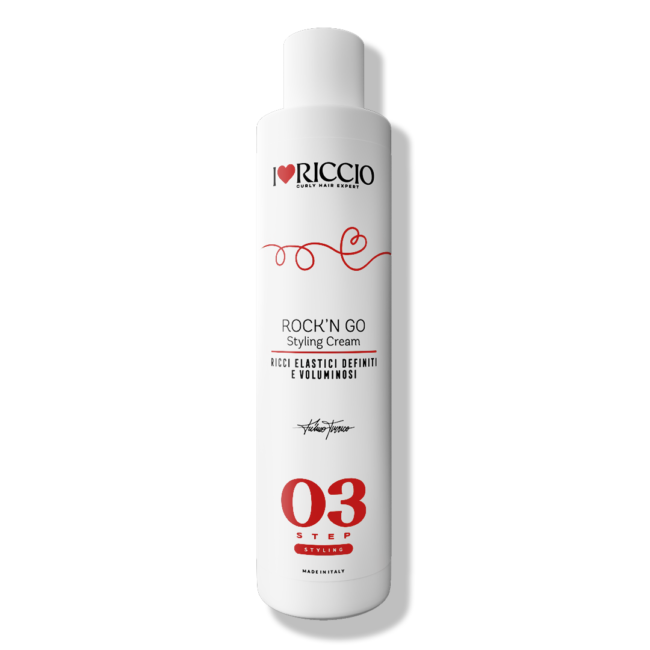
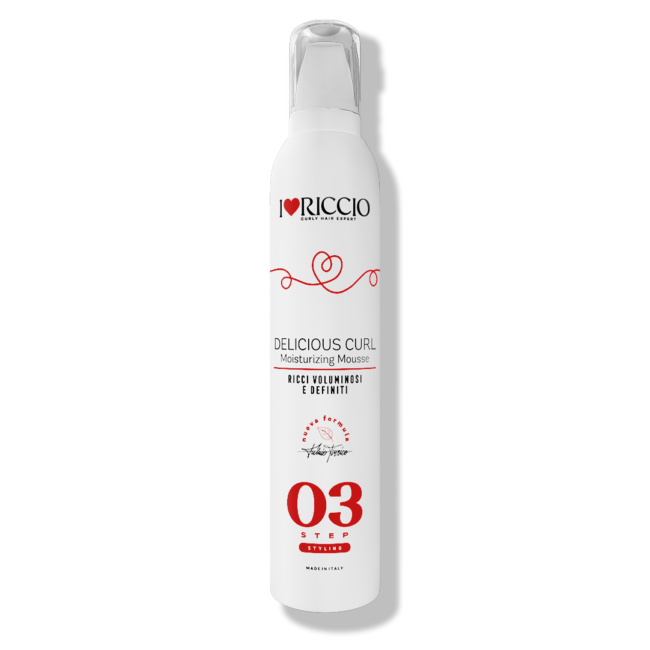
Whichever option you choose, it’s essential to support it with a targeted Curly Routine using hydrating, nourishing, and protective products. Colored curly hair needs specific care: opt for sulfate-free formulas enriched with plant oils, butters, and active ingredients that help preserve fiber elasticity and color vibrancy.
The best coloring techniques for curly hair
When it comes to coloring techniques for curly hair, it’s important to distinguish between methods that enhance the natural texture and those that risk compromising it. Curly hair is naturally more delicate and porous: overly aggressive treatments — such as traditional highlights, heavy shatush, or intense lightening — can cause dryness, loss of elasticity, and curl breakage. These techniques are best avoided, especially if not paired with a dedicated routine and expert hands.
Fortunately, there are gentler, more targeted coloring techniques designed to respect the curly structure and keep curls healthy, defined, and luminous.
1. Tone-on-tone color
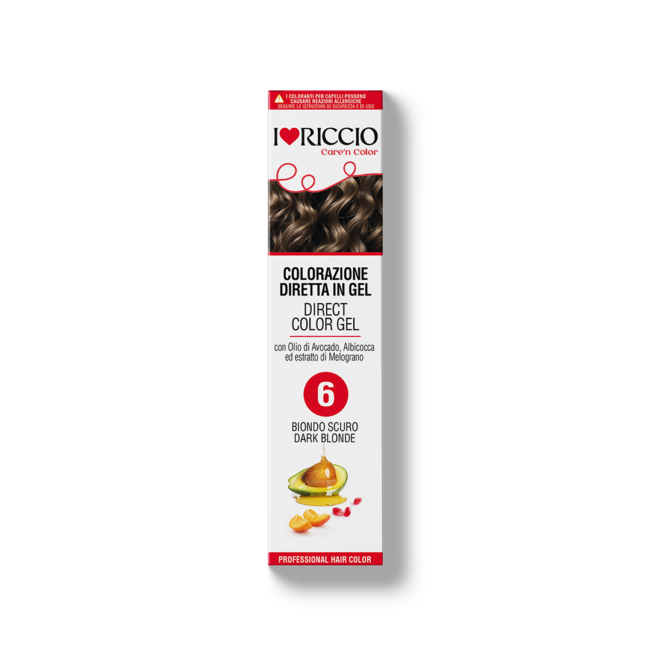
This technique allows you to achieve natural reflections, cover early grays, or refresh your color without stressing the hair fiber. Direct gel-based colors, like those in our Care’n Color line, don’t require oxidation and keep hair soft, shiny, and protected. They’re ideal for those who want visible yet gentle results.
2. Plant-based colors or phytopigments
Colorations made with plant pigments, such as Phytoterre and Henna, offer light, natural coverage. Perfect for sensitive scalps or dry hair, they don’t penetrate deeply but coat the hair with a reflective film, adding shine and protection without altering the curl structure.
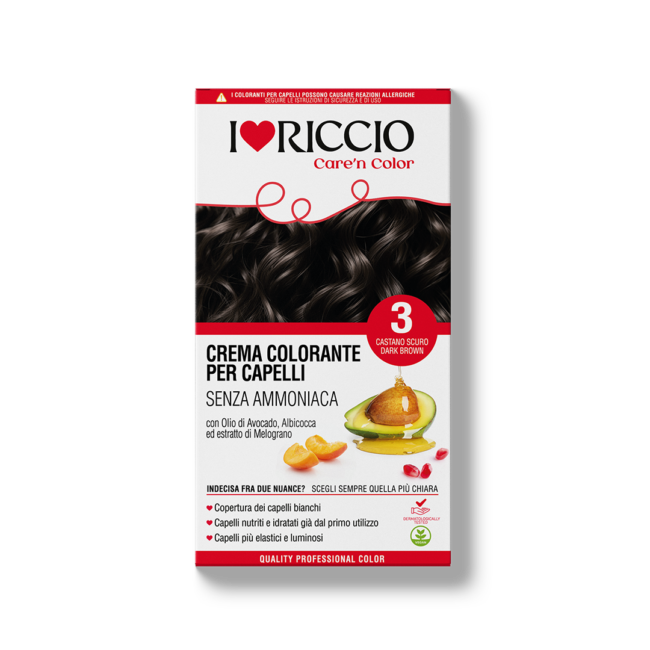
3. Ammonia-free color creams
These formulas are gentler than traditional dyes and are designed to minimize the risk of dehydration. Ammonia-free color creams provide good coverage, are often enriched with nourishing oils, and help maintain curls that are elastic and well-defined even after coloring.
4. Customized highlights
If you want to add movement to your hair, selectively lightening a few strands can be an option. However, invasive techniques like traditional highlights, shatush, or balayage should be avoided, as they can compromise curl health. Light effects should only be created by colorists experienced with curly hair, who know how to balance color results with texture care.
5. Toners and glosses
Perfect for refreshing an existing color or experimenting with temporary shades without altering the hair fiber. Toners and glosses are usually ammonia-free and don’t require bleaching — a versatile, low-commitment solution that’s ideal between color services.




Coloring your curly hair can be a style statement — but also an act of care. Whether you choose subtle highlights, natural tones, or new on-trend shades, the key is to listen to your curls and choose consciously.
With the right techniques, suitable products, and a Curly Routine that nourishes and protects, every color can become your ally to shine… in your own way.